HuaZhiHui

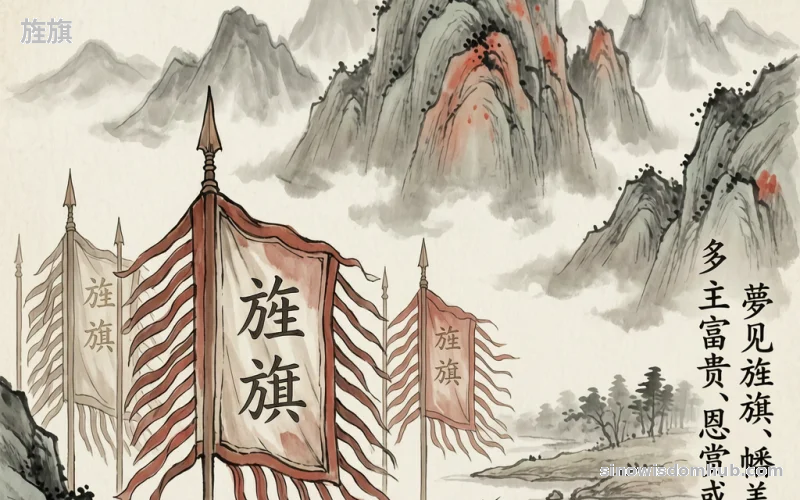
Dream of Banner

Banner — 解夢配圖

Dreams of Banner in Zhou Gong's Dream Interpretation.

Ancient interpretation of dream scenes

持節受賞

古人把手持旌節讀作得遇貴人提拔或領受皇恩的吉兆,象徵現實中將獲得權力認可或實質獎賞。從心理學視角看,這反映夢者對自我價值被肯定與社會地位提升的渴望。

Related original: 2
  • 抱旌節主貴人扶 —— In ancient dream interpretation, "抱旌節主貴人扶" was considered an omen.
  • 手持旌節有恩賞 —— In ancient dream interpretation, "手持旌節有恩賞" was considered an omen.

製蓋迎見

古人把製作、迎見新旌或羽蓋白蓋覆身讀作富貴臨門、家運昌隆之兆,龍紋與白色皆屬純陽至貴之色。此情境映射夢者內心對安定保障與尊榮生活的嚮往,亦暗示準備就緒以迎接人生轉機。

Related original: 6
  • 旌旂有龍大吉利 —— In ancient dream interpretation, "旌旂有龍大吉利" was considered an omen.
  • 造旌蓋主大吉利 —— In ancient dream interpretation, "造旌蓋主大吉利" was considered an omen.
  • 羽蓋蓋身主富貴 —— In ancient dream interpretation, "羽蓋蓋身主富貴" was considered an omen.
  • 旂旛迎接大富貴 —— In ancient dream interpretation, "旂旛迎接大富貴" was considered an omen.
  • 白蓋覆身大吉利 —— In ancient dream interpretation, "白蓋覆身大吉利" was considered an omen.
  • 見做新旌大吉利 —— In ancient dream interpretation, "見做新旌大吉利" was considered an omen.

異象分離

古人把旌劍入山、旗旛竟出或與人分傘讀作凶險、疾病或人事分散的預警,象徵秩序崩解或關係疏離。心理學上,這類意象常是潛意識對失控焦慮、健康隱憂或群體歸屬感動搖的投射。

Related original: 3
  • 旌劍引入山主凶 —— In ancient dream interpretation, "旌劍引入山主凶" was considered an omen.
  • 旗旛竟出主疾病 —— In ancient dream interpretation, "旗旛竟出主疾病" was considered an omen.
  • 與人分傘主分散 —— In ancient dream interpretation, "與人分傘主分散" was considered an omen.

'Zhou Gong's Dream Interpretation' text analysis

《周公解夢》中「旌旗」類原文呈現鮮明的階序與吉凶二元結構。吉兆多聚焦於「持節受賞」「製蓋迎見」與「白蓋覆身」,古人視旌旗為權柄、名譽與庇護的具象化,龍紋、新造、羽蓋皆指向貴人引路、官祿加身或家業豐隆;其規律在於「完整、尊崇、有序」即為福澤。凶兆則出現在「旌劍入山」「旗旛竟出」與「分傘」,象徵權威錯置、秩序紊亂或人情淡薄,古人以此警示疾病纏身、事業受阻或親友離散。整體而言,此批原文將物質符號與社會地位緊密綁定,反映傳統社會中人們對身份認同、外部認可與關係穩定的高度重視。旌旗之興衰,實為個人處境與時代氣運的微縮投影。

Psychological Perspective

【弗洛伊德視角】僅供參考。弗洛伊德會將旌旗視為權力慾望與自我肯定的投射。手持旌節或受恩賞,反映夢者潛意識中對社會地位、性能力(如傘蓋作為庇護與生殖象徵)及父權認可的渴望;而旌劍入山或分傘分散,則可能源於對失去控制權、競爭失敗或關係破裂的焦慮,屬於「願望滿足」受阻後的防衛機制顯影。

【榮格視角】僅供參考。榮格學派傾向將旌旗解讀為集體無意識中的「人格面具」或「自性」原型。新旌與白蓋覆身象徵個體與文化價值系統的和諧共鳴,代表精神整合與生命方向的確立;旗旛竟出或分傘則提示「陰影」浮現或舊有身份認同正在瓦解,夢境呼籲夢者正視內在衝突,完成從外在榮耀向內在完整的過渡。兩者皆強調夢境對現實心理狀態的補償與指引作用。

⚠️ The psychological analysis above is for reference only and does not represent the sole interpretation. Dream meanings vary from person to person.

旌旂有龍大吉利 刀劍旌節鐘鼓 · 202 —— In ancient dream interpretation, "旌旂有龍大吉利" was considered an omen.
抱旌節主貴人扶 刀劍旌節鐘鼓 · 203 —— In ancient dream interpretation, "抱旌節主貴人扶" was considered an omen.
旌劍引入山主凶 刀劍旌節鐘鼓 · 204 —— In ancient dream interpretation, "旌劍引入山主凶" was considered an omen.
造旌蓋主大吉利 刀劍旌節鐘鼓 · 205 —— In ancient dream interpretation, "造旌蓋主大吉利" was considered an omen.
羽蓋蓋身主富貴 刀劍旌節鐘鼓 · 206 —— In ancient dream interpretation, "羽蓋蓋身主富貴" was considered an omen.
旂旛迎接大富貴 刀劍旌節鐘鼓 · 207 —— In ancient dream interpretation, "旂旛迎接大富貴" was considered an omen.
旗旛竟出主疾病 刀劍旌節鐘鼓 · 208 —— In ancient dream interpretation, "旗旛竟出主疾病" was considered an omen.
手持旌節有恩賞 刀劍旌節鐘鼓 · 209 —— In ancient dream interpretation, "手持旌節有恩賞" was considered an omen.
白蓋覆身大吉利 刀劍旌節鐘鼓 · 210 —— In ancient dream interpretation, "白蓋覆身大吉利" was considered an omen.
見做新旌大吉利 刀劍旌節鐘鼓 · 211 —— In ancient dream interpretation, "見做新旌大吉利" was considered an omen.
與人分傘主分散 刀劍旌節鐘鼓 · 212 —— In ancient dream interpretation, "與人分傘主分散" was considered an omen.
Related Topics

⚠️ This page cites original texts from ancient books along with their vernacular explanations, recording how ancients interpreted dream symbols, not as predictions of the future. Original text from ancient classics, public domain. Vernacular explanations and search keywords are provided by this site and are not part of the original text.