HuaZhiHui

Dream of Shoe

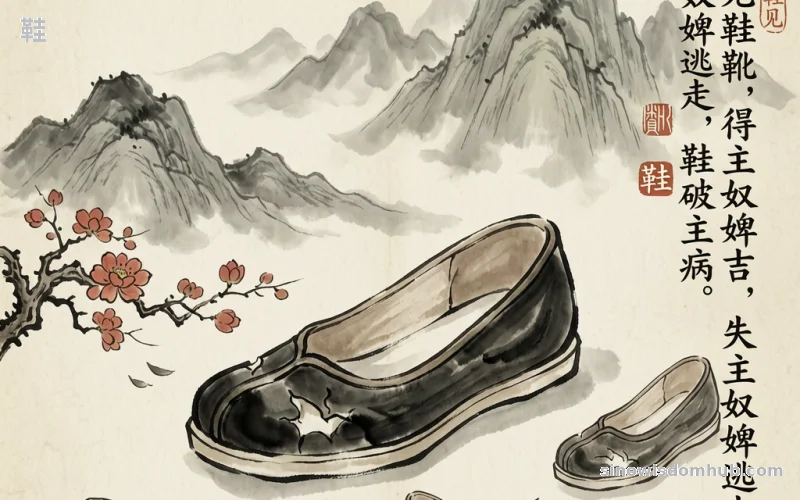
Shoe — 解夢配圖

Dreams of Shoe in Zhou Gong's Dream Interpretation.

Ancient interpretation of dream scenes

得鞋與著履

古人把得靴鞋、著麻鞋或乞得鞋履讀作得賢助、百事和合與僕從順遂之吉兆。

Related original: 3
  • 得靴鞋主奴婢吉 —— In ancient dream interpretation, "得靴鞋主奴婢吉" was considered an omen.
  • 著麻鞋百事和合 —— In ancient dream interpretation, "著麻鞋百事和合" was considered an omen.
  • 乞得鞋履人助力 —— In ancient dream interpretation, "乞得鞋履人助力" was considered an omen.

失履、脫鞋與破鞋

古人把失履、脫靴、鞋破或木履脫時讀作家宅不寧、僕役離散、自身出厄或親屬有恙之凶兆。

Related original: 5
  • 人著己履妻有私 —— In ancient dream interpretation, "人著己履妻有私" was considered an omen.
  • 失履主奴婢逃走 —— In ancient dream interpretation, "失履主奴婢逃走" was considered an omen.
  • 脫靴束帶主有凶 —— In ancient dream interpretation, "脫靴束帶主有凶" was considered an omen.
  • 鞋破子孫妻妾病 —— In ancient dream interpretation, "鞋破子孫妻妾病" was considered an omen.
  • 木履脫時己出厄 —— In ancient dream interpretation, "木履脫時己出厄" was considered an omen.

起居器物之象

古人把好被自蓋讀作家業豐足、得享富貴之兆。此條雖言被褥,然與鞋履同屬貼身起居之物,古夢書常將衣履器用並論為安身立命之基。

Related original: 1
  • 好被自蓋得富貴 —— In ancient dream interpretation, "好被自蓋得富貴" was considered an omen.

'Zhou Gong's Dream Interpretation' text analysis

這批原文呈現古代對「鞋履」的雙重象徵邏輯。鞋在傳統社會是行路之具與階級符號,故夢中得鞋、穿新履多主根基穩固、得他人助力或家宅和睦;反之,失履、破鞋則預示失去依靠、僕役離散或親屬健康受損。值得注意的是,脫鞋與否具情境差異:日常失履為凶,但脫去沉重靴帶或木履卻可能象徵卸下枷鎖、脫離險境。整體而言,古人將鞋履視為個人處世能力與家庭秩序的延伸,吉凶判斷高度依賴「完整與否」、「得與失」以及「穿著狀態」,反映農業社會對安身立命與人事依附的重視。

Psychological Perspective

弗洛伊德視角下,鞋履常被解讀為陽具象徵或性能力的隱喻。得鞋、穿新鞋反映個體對自信與掌控力的渴望;而失鞋、破鞋則可能觸發閹割焦慮,暗示對性無能或關係失控的潛意識恐懼。如「人著己履妻有私」折射出佔有慾與嫉妒心,體現本我與超我的衝突。榮格則將鞋視為「人格面具」與人生道路的載體。穿鞋代表個體在社会中行走的適應機制,得鞋象徵自我整合與方向確立;脫鞋或破鞋則可能標誌舊有身份認同的瓦解,是邁向個體化的轉折點,提示夢者需重新審視生命軌跡。以上解析僅供參考。

⚠️ The psychological analysis above is for reference only and does not represent the sole interpretation. Dream meanings vary from person to person.

好被自蓋得富貴 冠帶衣服鞋襪 · 191 —— In ancient dream interpretation, "好被自蓋得富貴" was considered an omen.
人著己履妻有私 冠帶衣服鞋襪 · 192 —— In ancient dream interpretation, "人著己履妻有私" was considered an omen.
得靴鞋主奴婢吉 冠帶衣服鞋襪 · 193 —— In ancient dream interpretation, "得靴鞋主奴婢吉" was considered an omen.
失履主奴婢逃走 冠帶衣服鞋襪 · 194 —— In ancient dream interpretation, "失履主奴婢逃走" was considered an omen.
脫靴束帶主有凶 冠帶衣服鞋襪 · 195 —— In ancient dream interpretation, "脫靴束帶主有凶" was considered an omen.
鞋破子孫妻妾病 冠帶衣服鞋襪 · 196 —— In ancient dream interpretation, "鞋破子孫妻妾病" was considered an omen.
著麻鞋百事和合 冠帶衣服鞋襪 · 197 —— In ancient dream interpretation, "著麻鞋百事和合" was considered an omen.
乞得鞋履人助力 冠帶衣服鞋襪 · 199 —— In ancient dream interpretation, "乞得鞋履人助力" was considered an omen.
木履脫時己出厄 冠帶衣服鞋襪 · 200 —— In ancient dream interpretation, "木履脫時己出厄" was considered an omen.
Related Topics

⚠️ This page cites original texts from ancient books along with their vernacular explanations, recording how ancients interpreted dream symbols, not as predictions of the future. Original text from ancient classics, public domain. Vernacular explanations and search keywords are provided by this site and are not part of the original text.