HuaZhiHui

Dream of Horse

Horse — 解夢配圖

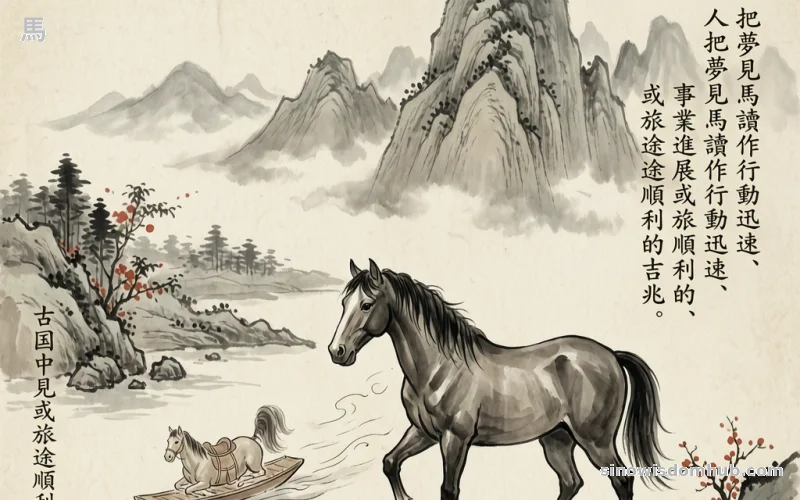
In the Zhou Gong tradition, dreaming of a horse was considered an auspicious sign of swift action, career progress, or smooth travels.

Ancient interpretation of dream scenes

馳騁遠行

古人把馬匹遠行與奔走讀作事業拓展或消息傳遞之兆。夢見馬行千里、群馬奔遠或罪人走馬,多預示行程順利、災厄消散或文書喜訊;若結合心理學視角,此類場景常映射夢者對突破現狀、追求自由與目標導向的內在渴望。

Related original: 4
  • 馬行千里大喜至 —— In ancient dream interpretation, "馬行千里大喜至" was considered an omen.
  • 走馬來往文書事 —— In ancient dream interpretation, "走馬來往文書事" was considered an omen.
  • 群馬奔遠百凶解 —— In ancient dream interpretation, "群馬奔遠百凶解" was considered an omen.
  • 罪人走馬厄事去 —— In ancient dream interpretation, "罪人走馬厄事去" was considered an omen.

騎乘駕馭

古人把騎乘的輕重緩急與馬匹毛色讀作掌控力與身心狀態的鏡像。乘快馬、騎驢騾主吉得財,但乘白馬反主疾病,顯示古人重視「勢」與「體」的平衡;從心理學來看,騎乘象徵自我意識對潛能(馬)的調度,速度與顏色反映夢者對生活節奏的焦慮或自信。

Related original: 3
  • 乘馬快吉鈍主凶 —— In ancient dream interpretation, "乘馬快吉鈍主凶" was considered an omen.
  • 乘白馬者主疾病 —— In ancient dream interpretation, "乘白馬者主疾病" was considered an omen.
  • 騎驢騾主得財吉 —— In ancient dream interpretation, "騎驢騾主得財吉" was considered an omen.

入宅生息

古人把馬匹入內室或屋中生駒讀作家運變遷與隱私邊界的信號。馬入室多主風化或隱私外洩之事,而屋中生馬則為大吉,體現古人以「野性入內」區分吉凶的直覺;心理學上,馬入居所可視為本我衝動與家庭規範的碰撞,或暗示新生命、新契機正在私人領域孕育。

Related original: 2
  • 馬入室主奸情事 —— In ancient dream interpretation, "馬入室主奸情事" was considered an omen.
  • 屋中生馬主大吉 —— In ancient dream interpretation, "屋中生馬主大吉" was considered an omen.

役使互動

古人把殺馬、洗馬、馬咬人或馬舞庭前讀作資源轉換與情緒釋放的過程。殺馬得酒食、披洗放馬皆主喜事,馬咬人反得祿位,顯示古人認為「損耗」與「衝突」可能轉化為實質利益;心理學視角下,這反映了夢者處理壓力、釋放攻擊性或重新分配精力的潛意識機制。

Related original: 5
  • 殺驢騾馬有酒食 —— In ancient dream interpretation, "殺驢騾馬有酒食" was considered an omen.
  • 馬舞庭前凶事散 —— In ancient dream interpretation, "馬舞庭前凶事散" was considered an omen.
  • 馬駝錢物失祿位 —— In ancient dream interpretation, "馬駝錢物失祿位" was considered an omen.
  • 披洗放馬皆喜事 —— Ancient interpreters viewed "披洗放馬皆喜事" as a dream symbol.
  • 被馬咬有祿位至 —— In ancient dream interpretation, "被馬咬有祿位至" was considered an omen.

'Zhou Gong's Dream Interpretation' text analysis

《周公解夢》中關於「馬」的占斷呈現出強烈的「情境決定論」特徵。古人視馬為陽剛、仕途、遠行與財富的象徵,但吉凶並非固定於動物本身,而是取決於夢者的互動方式與馬的狀態。例如,馳騁遠行、放牧洗刷多主吉慶,反映古代社會對行動力與資源盤點的肯定;而騎乘快慢、馬匹毛色(如白馬)、負重失祿或入室亂倫,則轉為警示,揭示古人對「失控」、「過度消耗」與「私德越界」的憂慮。整體而言,這批原文遵循「動靜相宜、內外有別」的邏輯:馬在野外奔放為順勢,在室內則需防範隱私與名節;馬載重物雖顯繁榮,卻暗藏職位不保之危。這不僅是占卜經驗的積累,更折射出傳統社會對勞動力、官祿體系與家族秩序的高度敏感,強調夢者應審時度勢、謹守本分。

Psychological Perspective

【弗洛伊德視角】僅供參考。弗洛伊德精神分析學派常將馬視為本能慾望(尤其是力比多)或原始衝動的隱喻。夢中騎馬代表自我試圖駕馭潛意識的欲望;若馬匹失控、被咬或遭殺戮,則可能反映夢者內心對欲望壓抑的焦慮,或現實中遭遇挫折後的攻擊性轉向。白馬主病、負重失祿等意象,亦可解讀為潛意識透過身體症狀或職業危機的象徵,提醒夢者正承受過度的心理負荷與未滿足的願望衝突。

【榮格視角】僅供參考。榮格分析心理學則傾向將馬視為集體無意識中的原型符號,象徵生命力、靈魂的驅動力或個體化進程中的「陰影」。馬行千里、群馬奔遠對應著心靈探索與人格擴展的旅程;馬入室或屋中生駒,則暗示潛意識內容正湧入意識層面,帶來創傷或新生的雙重可能。此夢境鼓勵夢者接納內在的野性力量,將其轉化為創造與整合的資源,而非單純恐懼或壓制。

⚠️ The psychological analysis above is for reference only and does not represent the sole interpretation. Dream meanings vary from person to person.

殺驢騾馬有酒食 被害鬥傷打罵 · 735 —— In ancient dream interpretation, "殺驢騾馬有酒食" was considered an omen.
馬舞庭前凶事散 牛馬豬羊六畜 · 929 —— In ancient dream interpretation, "馬舞庭前凶事散" was considered an omen.
馬行千里大喜至 牛馬豬羊六畜 · 931 —— In ancient dream interpretation, "馬行千里大喜至" was considered an omen.
乘馬快吉鈍主凶 牛馬豬羊六畜 · 932 —— In ancient dream interpretation, "乘馬快吉鈍主凶" was considered an omen.
走馬來往文書事 牛馬豬羊六畜 · 933 —— In ancient dream interpretation, "走馬來往文書事" was considered an omen.
馬駝錢物失祿位 牛馬豬羊六畜 · 934 —— In ancient dream interpretation, "馬駝錢物失祿位" was considered an omen.
馬入室主奸情事 牛馬豬羊六畜 · 935 —— In ancient dream interpretation, "馬入室主奸情事" was considered an omen.
披洗放馬皆喜事 牛馬豬羊六畜 · 936 —— Ancient interpreters viewed "披洗放馬皆喜事" as a dream symbol.
群馬奔遠百凶解 牛馬豬羊六畜 · 937 —— In ancient dream interpretation, "群馬奔遠百凶解" was considered an omen.
罪人走馬厄事去 牛馬豬羊六畜 · 938 —— In ancient dream interpretation, "罪人走馬厄事去" was considered an omen.
被馬咬有祿位至 牛馬豬羊六畜 · 939 —— In ancient dream interpretation, "被馬咬有祿位至" was considered an omen.
乘白馬者主疾病 牛馬豬羊六畜 · 940 —— In ancient dream interpretation, "乘白馬者主疾病" was considered an omen.
騎驢騾主得財吉 牛馬豬羊六畜 · 941 —— In ancient dream interpretation, "騎驢騾主得財吉" was considered an omen.
屋中生馬主大吉 牛馬豬羊六畜 · 950 —— In ancient dream interpretation, "屋中生馬主大吉" was considered an omen.
Related Topics

⚠️ This page cites original texts from ancient books along with their vernacular explanations, recording how ancients interpreted dream symbols, not as predictions of the future. Original text from ancient classics, public domain. Vernacular explanations and search keywords are provided by this site and are not part of the original text.